SEO in 2026: How AI Is Changing the Way We Search
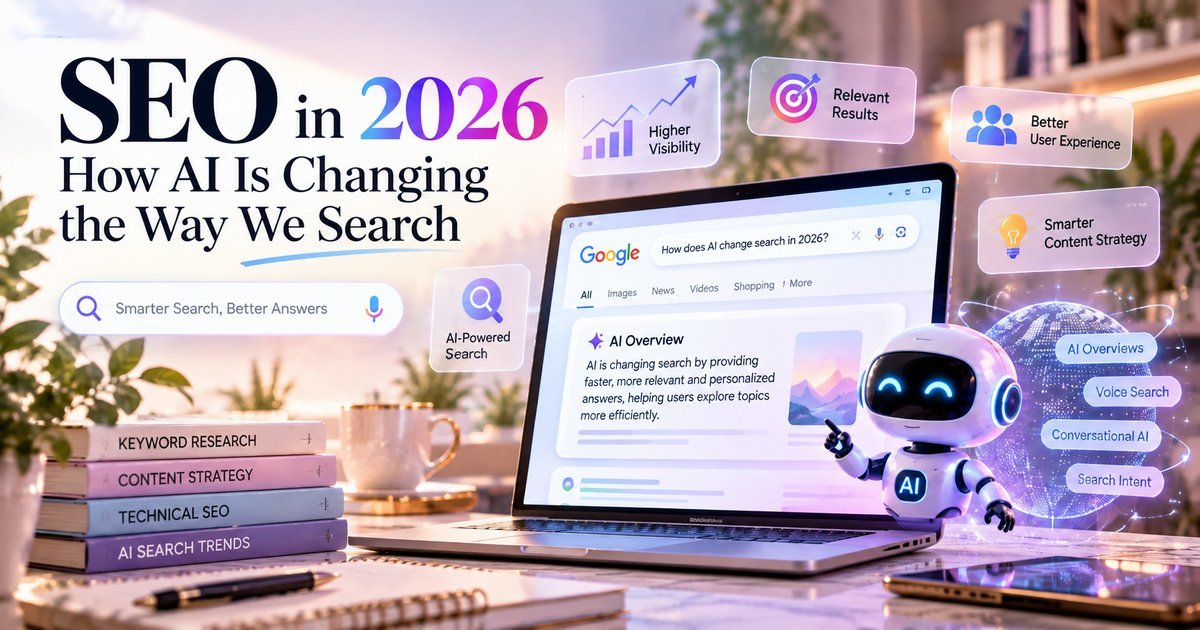
SEO in 2026: How AI Is Changing the Way We Search
Search Engine Optimization (SEO) has evolved significantly over the years. Earlier, businesses primarily focused on keywords, backlinks, and website rankings to improve their online visibility. Today, artificial intelligence (AI) is transforming how people search for information, discover brands, and make decisions online.
In 2026, search is no longer limited to typing keywords into Google and clicking on links. People are increasingly using AI-powered search experiences, conversational queries, and AI-generated summaries to find answers.
For businesses, marketers, and content creators, understanding these changes is essential. A successful SEO strategy now requires more than traditional optimization techniques. It involves creating helpful content, understanding user intent, maintaining a technically sound website, and building trust.
Let's explore how AI is changing SEO in 2026 and what businesses can do to stay visible online.
1. How AI Is Transforming Search Engines
Artificial intelligence is helping search engines understand the meaning and context behind search queries.
Instead of focusing only on matching keywords, modern search systems can interpret what users are trying to find and deliver more relevant information.
For example, a user might search for "how can a small business get more customers online?" Rather than looking for an exact keyword match, AI-powered search experiences can help users explore relevant advice, strategies, and resources.
This shift makes it important for businesses to create content that answers real questions clearly.
The key takeaway: Modern SEO is about understanding your audience and providing useful answers, not simply repeating keywords.
2. The Rise of AI-Powered Search
AI-powered search experiences are changing how information appears online. Features such as Google's AI Overviews and conversational AI assistants can summarize information and help users explore complex topics.
As a result, businesses need to think beyond traditional search rankings. Being discoverable through relevant search results and being referenced in AI-generated answers can offer additional opportunities to reach audiences.
However, traditional SEO remains important. Search engines still need to discover, crawl, and understand website content.
Businesses should focus on publishing accurate information, using descriptive headings, maintaining accessible websites, and providing clear answers to common questions.
There is no guaranteed method to appear in AI-generated answers, but creating reliable and useful content is a strong foundation for search visibility.
3. High-Quality Content Matters More Than Ever
AI tools have made content creation faster, but they have also made the internet more crowded with similar information.
Publishing more articles does not automatically lead to better search rankings. Content needs to offer genuine value to its readers.
High-quality content should answer questions, provide practical advice, include relevant examples, and demonstrate knowledge of the subject.
For example, a digital marketing agency could publish a case study explaining a campaign's objectives, strategy, results, and lessons learned. This offers readers more practical value than a generic article about digital marketing.
AI can assist with research, brainstorming, and editing, but human review remains important for accuracy, originality, and relevance.
The goal is not simply to create content faster. It is to create content that genuinely helps people.
4. Search Intent and Keyword Research
Keywords remain an important part of SEO, but understanding search intent is equally essential.
Search intent refers to the reason behind a user's search. Someone searching for "what is SEO" wants to learn, while someone searching for "best SEO tools for small businesses" may be comparing available options.
Marketers should create content that matches these different needs.
An effective keyword strategy includes researching relevant search terms, identifying frequently asked questions, understanding user intent, and exploring related topics.
AI tools can help generate keyword ideas and organize related queries. However, marketers should validate those ideas using keyword research tools and actual search results.
Keywords should be used naturally in titles, headings, meta descriptions, and website content.
The focus should be on answering the right questions rather than forcing keywords into every paragraph.
5. Technical SEO Still Plays an Important Role
Even excellent content needs a technically sound website.
Technical SEO helps search engines crawl, understand, and index website pages. Without a strong technical foundation, important content may struggle to appear in search results.
Businesses should pay attention to several important areas:
Website speed: Ensure pages load efficiently.
Mobile usability: Make the website easy to use on smartphones.
Crawlability and indexing: Help search engines access important pages.
Internal linking: Connect related pages to improve navigation.
Structured data: Help search engines interpret specific information about a page.
Website security: Use HTTPS to protect connections.
These fundamentals remain valuable even as AI changes how users discover information. A combination of helpful content and strong technical SEO supports a better experience for both users and search engines.
6. How Businesses Can Adapt Their SEO Strategy in 2026
Understanding SEO trends is useful, but applying them consistently is what makes a difference.
Businesses can strengthen their SEO strategy by following these practices:
Understand your audience: Research the questions, interests, and problems of your target customers.
Create helpful content: Publish articles, guides, and resources that provide clear answers and practical insights.
Optimize website pages: Use relevant keywords, descriptive titles, logical headings, and useful internal links.
Use AI responsibly: Apply AI to brainstorming, research, and content planning, but verify facts and add original human insights.
Build credibility: Support factual claims with reliable sources and demonstrate relevant expertise.
Monitor performance: Use Google Search Console and Google Analytics to understand search visibility, website traffic, and conversions.
Update existing content: Review important pages regularly to keep information accurate and relevant.
SEO is an ongoing process. Regular measurement and improvement are essential for long-term results.
7. The Future of SEO: What Should Marketers Expect?
AI-powered search, conversational interfaces, and new ways of discovering information will continue to influence the digital marketing landscape.
Businesses will need to remain flexible and understand how their audiences search for answers across different platforms.
However, this does not mean traditional SEO is disappearing. Relevant content, technical performance, search intent, and credibility remain important foundations.
The strongest strategies will combine AI-powered efficiency with human creativity, experience, and expertise.
Instead of chasing every new trend, businesses should focus on helping users find reliable information and making their brands genuinely useful.
Conclusion
SEO in 2026 is evolving alongside artificial intelligence. AI-powered search experiences are changing how people ask questions, discover information, and interact with search results.
However, successful SEO is still built on understanding the audience, creating valuable content, maintaining a technically sound website, and building trust.
Businesses that combine traditional SEO fundamentals with thoughtful use of AI can adapt more effectively to changing search behavior.
The future of SEO is not just about ranking higher. It is about creating content that is useful, credible, and discoverable wherever people search for answers.